
178 Trusted Websites, Including Paychex and Zoom, Served Card-Stealing Malware on Monday
Attackers slipped malicious code into Optimizely, a marketing tool that big-name websites load on every page. For part of November 16, sites like Paychex, Zoom, Salesforce and HSBC served visitors code that skimmed card numbers, swapped crypto wallet addresses and targeted older iPhones. Nobody had to click a bad link. Here is what it means for your business and the five things to check this week.
- supply-chain-attack
- optimizely
- card-skimming
- magecart
- ios-update
- website-security
- csp
- payroll
- cybersecurity
- smb
- managed-it
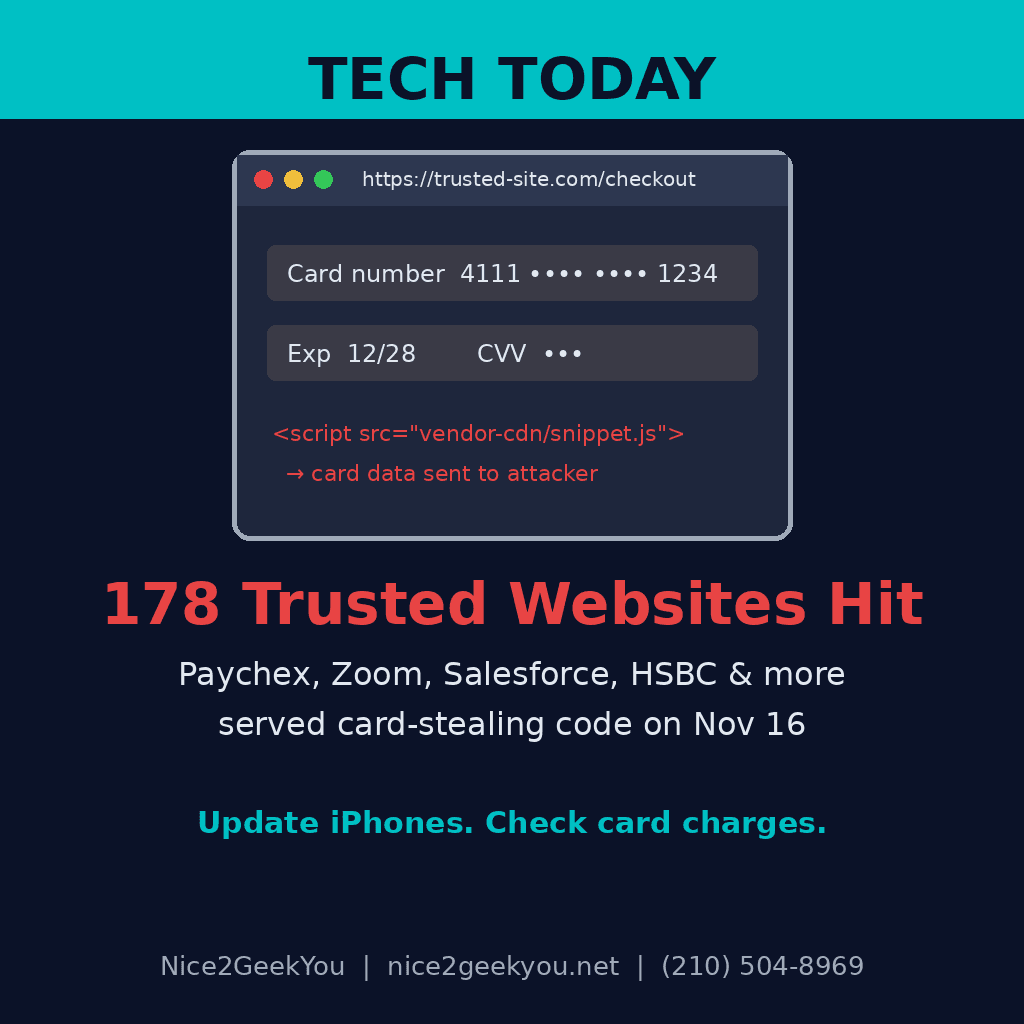
You didn't click anything wrong, and you still could have been exposed. On Monday, November 16, attackers abused a flaw in Optimizely, a website-testing tool that big companies load on every page, and pushed malicious code to the websites of 178 organizations. Security researcher Scott Helme of Report URI found the infection in 188 Optimizely scripts. Sites named in the reports include Paychex, Zoom, Salesforce, HSBC, Equifax, GitLab, Smartsheet, Stamps.com, CNN and the BBC.
- What the code did: it watched for card numbers, expiration dates and security codes typed into web pages and sent them to the attackers. It also swapped cryptocurrency wallet addresses for the attackers' own, grabbed cookies and screenshots, and tried to break into older iPhones and iPads with known exploit kits.
- Why it worked: the code came from Optimizely's own trusted servers, with a valid security certificate. To the browser, it looked exactly like the real thing.
- How big: Helme estimates the code may have loaded during roughly 34 million page visits (he stresses that counts visits, not victims). Wallets tied to the attack had received about $7,000 by the evening of November 16.
- The fix: Optimizely says it closed the hole in its account signup flow, removed the injected code, revoked tokens and notified affected customers. By late Monday, only 1 of the 188 infected scripts still carried the malware.
Why it matters for your money
This is a supply-chain attack: break into one trusted vendor, and its code runs on every customer's website at once. Your team logs into payroll, banking, shipping and meeting sites every day, and you have no control over what scripts those sites load. And if your own business website takes card payments on a page you host, every plug-in, chat widget and tracking script on that page can read what customers type. Report URI found that 68 of the affected sites had no Content Security Policy at all, a basic browser setting that can block exactly this kind of injected code.
What to do this week
- Update every iPhone and iPad your team uses for work to the latest iOS or iPadOS. The exploit kits in this attack target older versions.
- Check card statements from November 16 and after for any card used online that day, especially company cards. Report anything odd to the issuer right away.
- Sign out everywhere and reset passwords on sensitive accounts (payroll, banking, Zoom, Salesforce) if staff used them on November 16. Most services have a "sign out of all sessions" button.
- Take card payments only on hosted checkout pages like Square, Stripe or your processor's payment form. Reports say cards typed into hosted payment frames were not affected.
- Audit your own website's third-party scripts. List every plug-in, tracker and widget, remove what you don't use, and turn on a Content Security Policy so unknown code can't run.
Nice2GeekYou is based in San Antonio and serves all of Texas on site, and our managed IT plans cover remote clients across the U.S. We keep company phones and computers patched automatically, watch for risky logins, and review your website and payment setup so a vendor's breach doesn't become yours. Request a quote, see our monthly plans, or text us at (210) 504-8969.
Sources: BleepingComputer — Optimizely hack infected CNN, Fox News, BBC, Salesforce sites with malware (November 16, 2026); Newsweek — Cyber Attack Hits 178 Major Websites: Full List of Organizations (November 2026); Ars Technica — Hundreds of websites deliver potent malware cocktail to unsuspecting visitors (November 2026); TechTarget — Optimizely supply chain attack turns trusted scripts against 178 orgs (November 2026).