
Microsoft Says Hackers Read Its Customers' Admin Email Addresses. Expect Phishing That Knows Your Tenant
Microsoft is notifying organizations that attackers exploited a flaw in its Entra Connect Health service and read tenant details, including the email addresses of administrators and technical contacts. No passwords or tokens were exposed, but the people who hold the keys to your Microsoft 365 should expect very convincing, targeted phishing. Here is what was taken and the five things to do this week.
- microsoft
- entra-id
- entra-connect-health
- microsoft-365
- data-breach
- phishing
- admin-accounts
- mfa
- msp
- cybersecurity
- smb
- managed-it
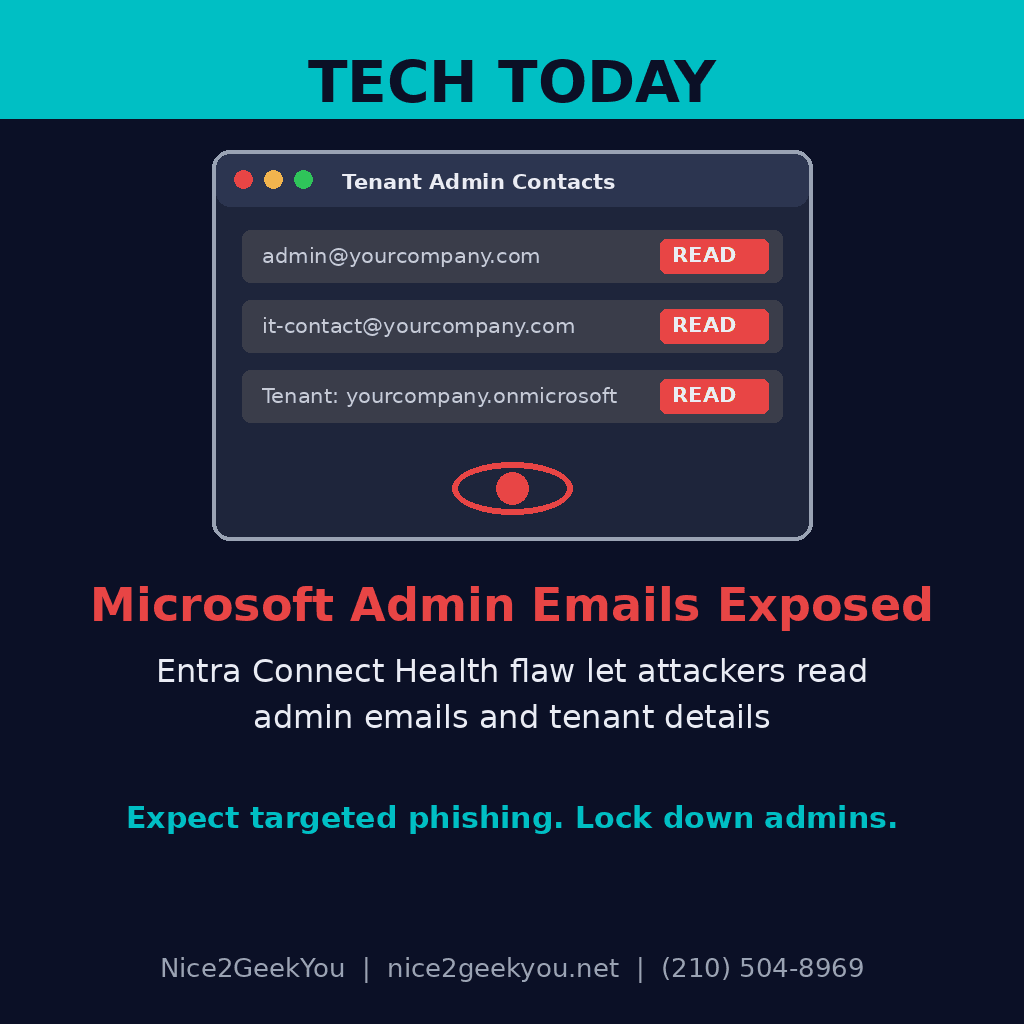
What happens to your payroll, your invoices and your customer email if the one person who runs your Microsoft 365 signs in to a fake page? Microsoft is now warning organizations that attackers got hold of exactly the information needed to try. On November 20, Microsoft began notifying customers that a flaw in its Entra Connect Health service was exploited to read tenant details, including the email addresses of administrator accounts and technical contacts.
- What it is: Entra Connect Health is a Microsoft cloud service that monitors the tool syncing an office's on-premises Active Directory with Microsoft 365 / Entra ID.
- The timeline: Microsoft says the flaw was introduced into the Connect Health API on July 23, 2026, discovered on November 9, fixed server-side on November 19, and its investigation concluded on November 20, when notifications went out through Azure Service Health.
- What was read: admin and technical-contact email addresses; tenant IDs, display names, initial domain names, country and region; Entra license tier; directory sync status and last sync time; Connect Health onboarding status; and an expired, no-longer-used certificate.
- What was not exposed: Microsoft says no user passwords, password hashes, authentication tokens, valid cryptographic keys, on-premises Active Directory layout or Azure subscription information, and it found no unauthorized configuration changes.
- What we don't know: Microsoft hasn't said how many organizations were affected, who did it, or when the access began. More than a dozen admins reported getting the notice on Reddit, and some IT providers said they received it for multiple client tenants.
Why it matters for your money
Nothing here lets an attacker sign in by itself. What it gives them is a ready-made phishing kit: the real names and addresses of the people who control your Microsoft 365, your real tenant name and domain, and details like when your directory last synced. A fake "your sync failed, sign in to review" email that quotes true details is far harder to spot. Microsoft itself is telling customers to warn their teams about targeted phishing and social engineering aimed at those exposed admin addresses. An administrator account is the master key: whoever controls it controls every mailbox, which is how payroll-change and fake-invoice scams get started.
What to do this week
- Ask your IT provider one question: "Did we, or any tenant you manage for us, get the Entra Connect Health notice in Azure Service Health?" Have them check the portal directly, not through a link in an email.
- Warn your admins and whoever answers IT calls. Expect emails, texts or calls that mention your company's Microsoft details and push someone to "sign in," "re-verify" or "approve a sync." Verify through a number you already have.
- Put phishing-resistant sign-in on every admin account. Microsoft specifically recommends phishing-resistant multifactor authentication, such as passkeys or security keys, for privileged accounts. A texted code isn't enough for the master key.
- Review sign-in and audit logs. Microsoft advises checking Entra audit and sign-in logs for anything unusual, and confirming your tenant's technical contacts and notification recipients are current and correct.
- Keep admin accounts separate from everyday email. The address that runs your tenant shouldn't be the same inbox someone uses to read invoices and newsletters all day.
Nice2GeekYou is based in San Antonio and serves all of Texas on site, and our managed IT plans cover remote clients across the U.S. We watch Microsoft's service health notices for the tenants we manage, lock down admin accounts with phishing-resistant sign-in, and tell you plainly whether you were affected. Request a quote, see our monthly plans, or text us at (210) 504-8969.
Sources: BleepingComputer — Microsoft Entra Connect Health flaw exploited to steal tenant data (November 21, 2026); Cybernews — Microsoft data breach exposes customer data (November 23, 2026); Azure Blog — Entra Connect Health flaw exposed tenant metadata; Microsoft's statement to BleepingComputer and its customer notice via Azure Service Health.